Several years ago, my great niece and I were playing with some old dollhouse figures from my childhood.
We didn’t have an actual dollhouse, so we grabbed a cardboard box and made one.
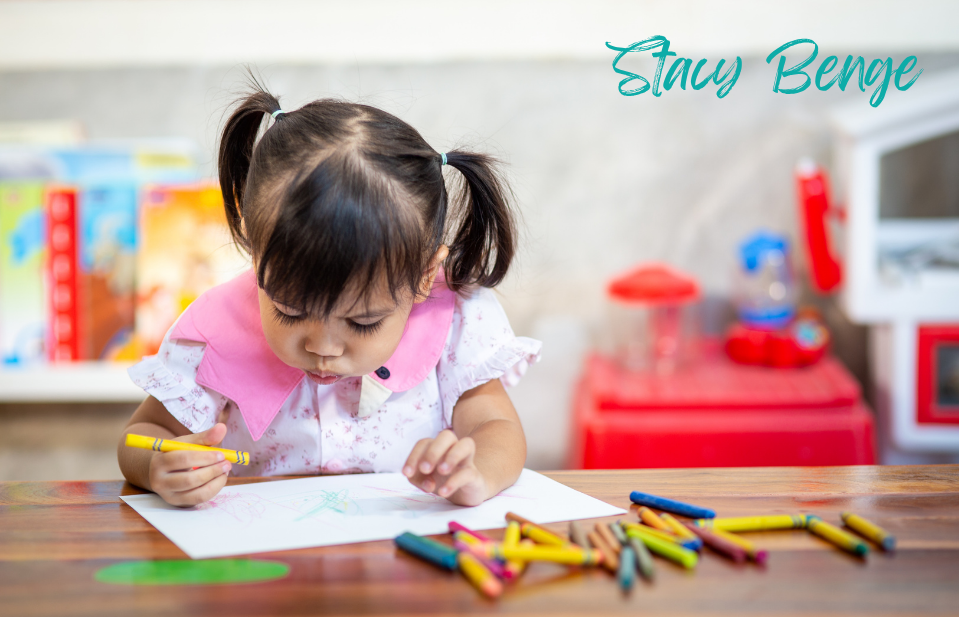
Then she asked for paper and crayons.
She wanted to draw houses to go around the dollhouse—her idea, her plan. She carefully placed her drawings next to the box: a row of homes, and eventually… a school.
And on that paper, she wrote one letter: 'S'.
While it was just one letter, it said a lot.
She was drawing with purpose. Her pictures represented something real. And when she chose to add that letter, she was beginning to understand that letters have meaning.
All of this happened during play.
There was no worksheet. No instruction.
Just curiosity, creativity, and connection.
The truth is...
Writing doesn’t begin with handwriting sheets or pencil grips. It begins with play.
When children scribble, draw, and tell stories about what they’ve created, they’re developing the earliest stages of writing and composition.
They’re learning that marks carry meaning. That pictures can tell stories. That words can live on paper.
And when they’re ready, letters start to appear.
This week, try this:
Set out blank paper and crayons.
No instructions. No expectations. Just the tools.
When a child begins to draw, sit nearby.
If they describe what they’re creating, ask: “Would you like me to write what you're saying?”
Sometimes they'll say yes. Sometimes no. But every time—they’re in charge of the moment.
,
You’re simply showing them that writing is useful, meaningful, and theirs to explore.
Pre-writing doesn't start with tracing. It starts with expression.
And it almost always shows up first through play.
Cheering you on,
Stacy